

Fire Damage Restoration.
Controlled Recovery.
Evidence-Led Restoration.
Fire damage extends beyond what is immediately visible. Heat, smoke, soot contamination and extinguishment activities can affect multiple areas of a property, creating challenges that continue long after the fire itself has been extinguished.
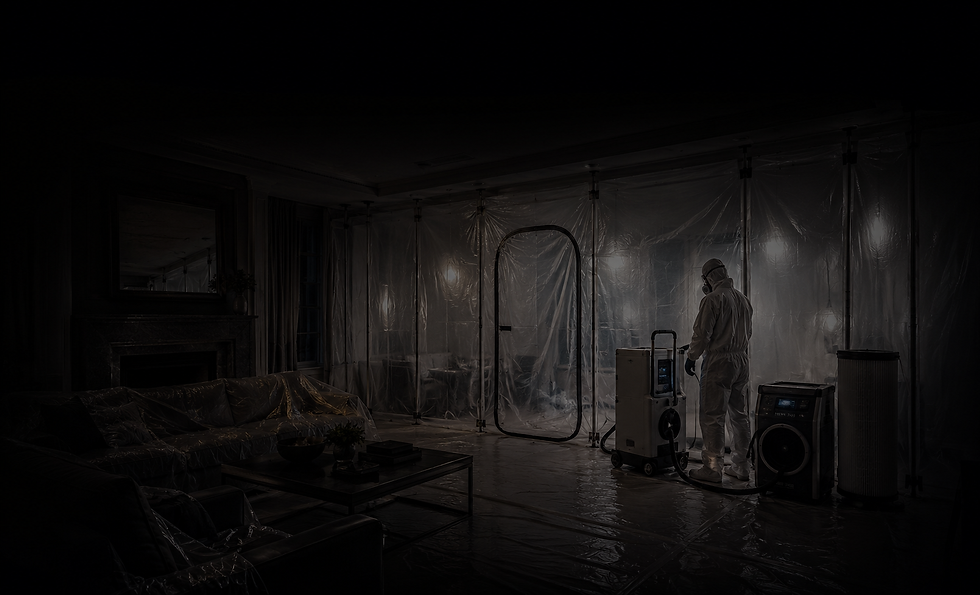
NDR provides specialist fire and smoke damage restoration services for residential, commercial and insurer-led claims. Our approach combines technical assessment, contamination verification, controlled restoration methodologies and clear stakeholder communication to support safe and structured recovery.

The Impact Of A Fire Extends Beyond What You Can See
Following a fire incident, visible structural damage often represents only part of the overall loss. Smoke, soot particles and combustion by-products can migrate throughout a property, affecting rooms and contents far beyond the original source of the fire.
Even areas that appear unaffected may experience contamination deposits, odour penetration and corrosive residue accumulation capable of causing ongoing deterioration if left untreated.
Successful restoration requires a full understanding of both the visible and hidden consequences of fire and smoke exposure before recovery decisions are made.

Smoke Contamination
Can Continue Long After The Fire Stops
The damage caused by smoke is often more extensive than the fire itself.
As smoke travels through a property it can penetrate porous materials, settle within concealed voids and deposit contamination across walls, ceilings, furnishings and personal belongings. Different fuel sources produce different contamination characteristics, each requiring specific restoration approaches.
Without timely intervention, acidic soot residues can contribute to staining, corrosion and progressive damage to both building materials and contents.
Early assessment and controlled mitigation help reduce secondary damage and support more successful restoration outcomes.

Fire Damage Doesn't Always End Where The Flames Stop
Smoke and combustion residues frequently extend beyond the immediate fire-affected area.
Contamination can migrate through ventilation pathways, service penetrations, roof voids, wall cavities and adjoining rooms, creating conditions that may not be immediately apparent during an initial visual inspection.
This hidden contamination can affect property finishes, insulation materials, mechanical systems and stored contents without obvious visible indicators.
Understanding the full extent of contamination is critical to developing an effective restoration strategy and ensuring no affected areas are overlooked.
Evidence
Before
Restoration
Effective restoration begins with understanding the full extent of the damage.
Every property presents unique contamination characteristics influenced by the fire source, materials involved, duration of exposure and the effectiveness of extinguishment activities.
Our assessment process combines technical inspection, contamination evaluation and detailed reporting to support informed restoration decisions.

Property Assessment
Initial evaluation of structural damage, smoke migration and contamination conditions.
Contamination Evaluation
Assessment of soot deposition, affected materials and restoration viability.
Contents Assessment
Identification of recoverable contents, priority items and specialist restoration requirements.
Restoration Strategy Development
Creation of a structured recovery plan based upon property conditions and restoration objectives.
Recovery Strategies Designed Around The Damage
No two fire incidents produce identical restoration requirements.
Recovery strategies must be developed around contamination type, structural conditions, affected contents and project objectives. The selected methodology must address both immediate stabilisation requirements and long-term recovery outcomes.
Our approach focuses on reducing further deterioration, restoring salvageable materials where practical and supporting a controlled progression towards reinstatement.
CONTAMINATION CONTROL
Preventing further spread of soot, smoke residues and airborne contamination.
STRUCTURAL CLEANING
Specialist cleaning methodologies tailored to affected building materials and finishes.
CONTENTS RESTORATION
Assessment, cleaning and recovery of salvageable possessions and business assets.
EVIDENCE-LED REPORTING
Technical documentation supporting restoration planning, stakeholder communication and claim progression.

Recovery Often Involves More Than The Property Itself
A fire incident rarely affects only the building.
Furniture, clothing, electronics, documents, photographs, stock, equipment and sentimental belongings may all be impacted by smoke, soot and contamination exposure.
Where appropriate, contents can often be assessed, cleaned, deodorised and restored using specialist restoration techniques designed to maximise salvage opportunities and reduce unnecessary replacement costs.
Successful recovery focuses not only on the structure itself, but also on helping occupants, businesses and property owners recover the items that matter most to them.
Communication
Throughout
Recovery
Restoration is only one part of a successful recovery process.
Property owners, insurers, loss adjusters, contractors and other stakeholders often require ongoing updates throughout the lifecycle of a fire damage claim.
Our structured reporting processes provide clear visibility of findings, restoration progress, contamination conditions, contents recovery activities and recommended next steps.
Inspection Reports
Contamination Assessments
Contents Inventories
Progress Updates
Photographic Records
Restoration Recommendations

A Restoration Solution.
Not Simply A Cleaning Process.
Fire restoration is not achieved through cleaning alone.
Successful recovery requires investigation, technical assessment, contamination understanding, restoration planning and clear communication throughout the claim lifecycle.
Every decision should be guided by evidence, property conditions and measurable restoration objectives.
It's about
restoring
confidence,
normality
and
continuity.

National Disaster Restoration
Need Assistance Following A Fire Or Smoke Damage Incident?
Whether the damage is limited to a single room or extends throughout an entire property, specialist assessment and structured restoration support can help establish a clear path towards recovery.
NDR provides fire and smoke damage restoration services for residential properties, commercial environments and insurer-led claims across the United Kingdom.